Share this
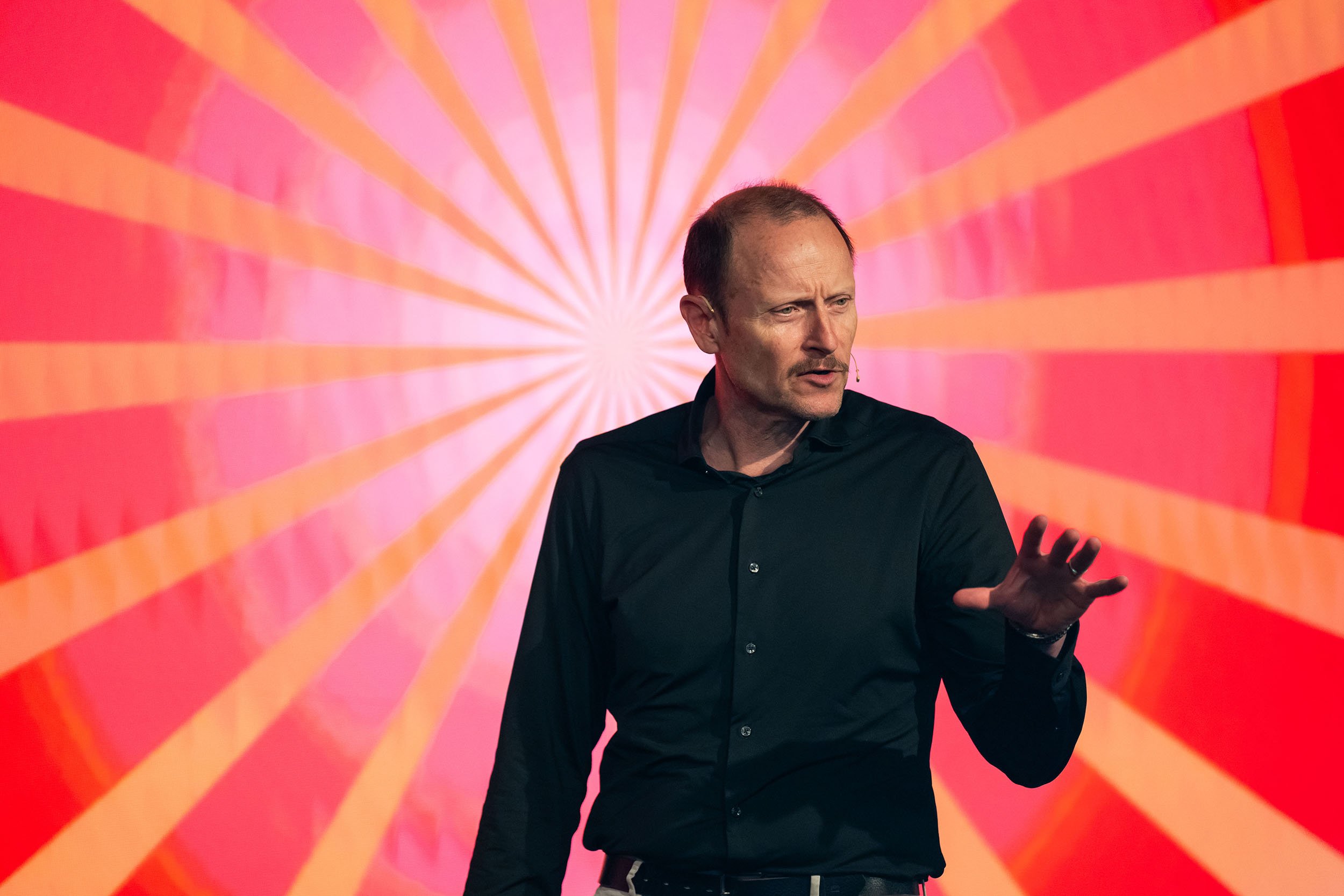
As a technophilosopher, Rens van der Vorst speaks and writes about the ethics and impact of technology. Often, that means making audiences uncomfortable in the best possible way. At Future Foundry, he closes the day with a keynote that is sharp, funny, and genuinely thought-provoking. Time to discover your digital gremlin.
AI is not a single thing
“I help people think more critically about technology” Rens says. “I'm not here to hand you a ten-step plan. I want to change the way you see things.” Rens is a lecturer and researcher at Fontys and wrote several books, such as 'Don't Mention the VAR' and ‘Digital Gremlins’.
Thinking about the impact of technology starts with language. “Take AI, for example. We throw the word around without ever saying which AI we mean. It’s like asking ‘what do you think about vehicles?’ without saying whether you mean a bicycle or a truck. That conversation goes nowhere.”
Productivity is not a goal
Rens sees real promise in technology. What concerns him is how little we think it through. “Look at the past thirty years. We set out to communicate better, and technology delivered: email, smartphones, Slack, Teams. But at the same time, everyone is more overwhelmed with communication than ever. When something gets easier, we do more of it. The net result is zero.”
AI is no different. “People assume AI will make us more productive. But being more productive is not a goal. Helping more customers, earning more revenue, getting more free time: those are goals. AI can be the means to get there, but only if you start with the goal.”
His point to Finance, BI, and ESG professionals: don't let the technology narrative take the lead. “We’ve been making that mistake for too long.”
Grip on the right things
The question Rens hears most in organizations is some version of: ‘how do we stay in control?’ His answer cuts through: “First ask yourself what you want to control. Technology gives you grip; on processes, on compliance, and on rules. But is that where you want grip?”
He sees the pattern everywhere. Organizations invest in systems that enforce rules and track compliance, while the original purpose gets lost. “In education, a student can demonstrate everything they've learned and still fail because their bibliography wasn't formatted correctly. The system serves the rulebook, not the student.”
The better question, according to Rens, is more fundamental: “How can technology help you achieve what you set out to do?”
You can't always trust the algorithm
Technology is built by people with interests and incentives. Take something as ordinary as a weather app. A day with nine hours of sunshine and one millimeter of rain at midnight shows up as a rain cloud. “Why? Because a rain cloud gets clicks. Sunshine doesn't. The app is designed around engagement, not accuracy.”
This illustrates a bigger point: the technology you use every day reflects the priorities of the people who built it. Understanding that changes how you use it.
Think before you automate
Rens often cites Bayern Munich's coach Vincent Kompany: don't believe the hype, and don't believe the drama. He applies the same logic to AI. "Understand what the technology can do, then ask where it genuinely moves your organization forward."
But first, define forward. "I was at a conference about AI for better cities. Everyone was talking about what AI could do. Nobody had stopped to ask what a city is, or what better looks like. You need those answers before anything else."
Meet your digital gremlin
Rens closes with a concept he has written a whole book about: the digital gremlin. A gremlin is a mythical creature with a knack for mechanics. It sabotages the system. Smartly, lightly, without needing to be technical. According to Rens, there's one in all of us, and we can all put it to good use.
That's something you need to experience live. His session at the Future Foundry is fast, often hilarious, and leaves you thinking differently about technology and your role in it. Join us and find out why every organization needs a digital gremlin.
Join us at Future Foundry
Share this
Join the Future Foundry: The next edition